Mass Human Resource Pvt. Ltd (MHR) is aware that there may be times when candidates, employees, clients and suppliers need to file an official complaint about unlawful and unethical practices, unjust treatment, harassment, and/or health and safety concerns in the workplace. This grievance procedure was created to clearly outline the process for these instances to ensure that all persons related to our company are heard and treated equally.
Purpose:
The propose of this grievance procedure is to
Scope:
These procedures are applicable to all MHR Candidates, employees, clients & suppliers. A grievance can be filed against any MHR employee, including senior management and shareholders. MHR defines a "grievance" as a formal work-related complaint, issue, and/or objection made by employees, candidates, clients and suppliers.
Procedure:
MHR encourages everyone to resolve minor disputes with the help of a liaison officer, manager, and a human resource (HR) department representative. If the informal complaint is not fairly and constructively resolved within 3 working days, they may file a formal grievance.
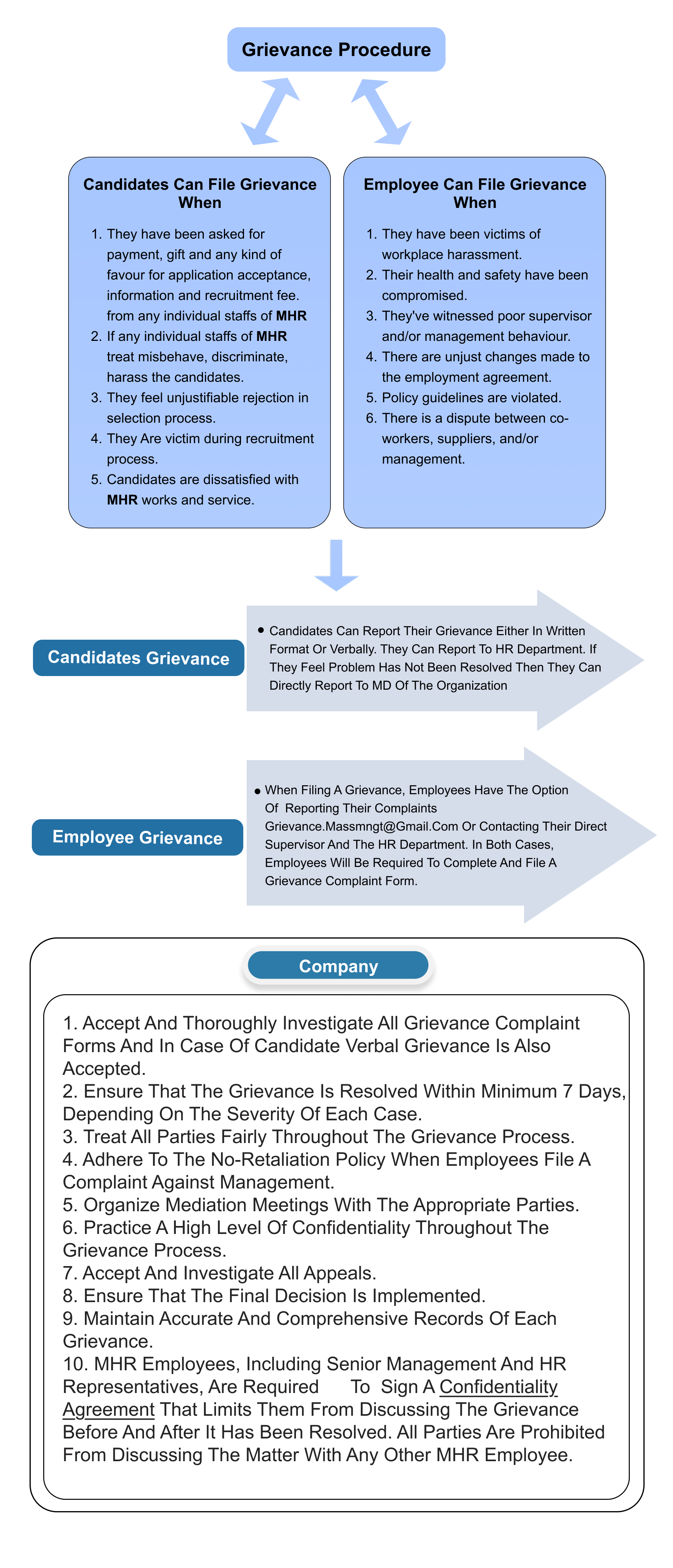
Candidates can file grievances when:
Employees can file grievances when:
MHR also recognizes that every case is different and this list is subject to change, depending on the definition filed in the Grievance Complaint Form.
Filing a Grievance:
Candidates
Candidates can report their grievance either in written format or verbally. They can report to HR department. If they feel problem has not been resolved then they can directly report to MD of the organization.
Employees
When filing a grievance, employees have the option of reporting their complaints to grievance.massmngt@gmail.com or contacting their direct supervisor and the HR department. In both cases, employees will be required to complete and file a Grievance Complaint Form.
Once the complaint has been submitted to the HR department, employees have the right to attend meetings with a witness, appeal decisions, and depending on the severity of the complaint, refuse to attend work until the grievance is resolved.
When a grievance is filed against another employee, company top management the accused also reserves the right to:
Company Responsibilities:
It is MHR Responsibility to:
Confidentiality:
MHR employees, including senior management and HR representatives, are required to sign a Confidentiality Agreement that limits them from discussing the grievance before and after it has been resolved. All parties are prohibited from discussing the matter with any other MHR employee.
Policy Violations:
If an employee is found to have violated the grievance procedure policy, they will be subject to disciplinary action, up to and including termination. The severity of each case will determine the type of disciplinary action, which may include a verbal or written warning, suspension, and/or termination.